
- 16.06.2025
- | Experts Insights
Bulgaria's Labor Market in 2025: The Workforce Deficit, AI's Impact and what Employers really want – valuable insights from Galina Manolova
Bulgaria's Labor Market in 2025: The Workforce Deficit, AI's Impact and what Employers really want – valuable insights from Galina Manolova
Share the news
5 February 2025 I Sofia, Bulgaria
Just recently, data published by the Employment Agency showed that for the first time since tracking of registered unemployment began, the number of registered jobless at the end of December fell below 150,000. The registered unemployment rate in December was 5.2%, representing a decrease of 0.4 percentage points compared to the same month of 2023.
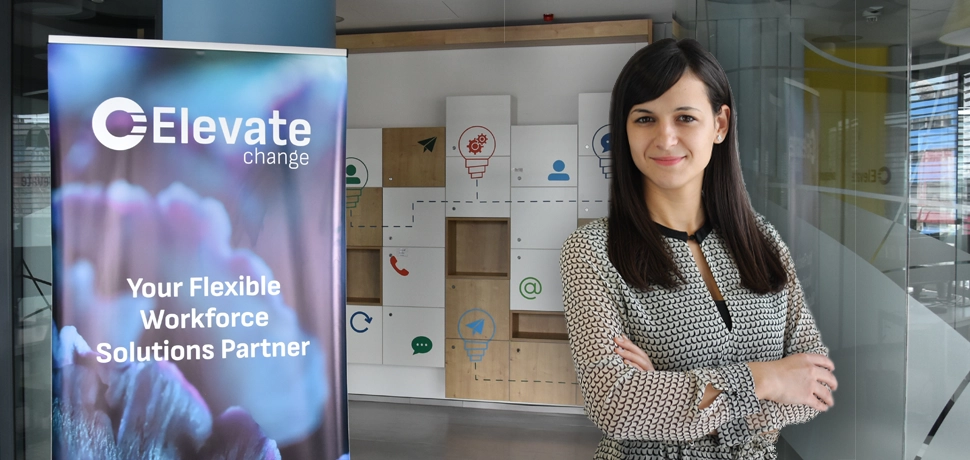
And at the start of 2025, Bulgaria’s labor market continues to show significant demand for personnel in several key sectors. At the moment, there is demand for talent in six key sectors. Which specialists are the most sought-after? In which sectors is there the biggest shortage of qualified workers? Which skills are lacking the most in the market? How is demand changing in the IT sector? Is Artificial Intelligence already impacting on the labor market? Here’s what Galina Manolova, Head of External Recruitment at Elevate, shared regarding current trends in the labor market.
1. In which sectors is there the biggest shortage of qualified workers? Which skills – both hard and soft are lacking the most in the market?
Right now, the market faces a substantial shortage of qualified personnel across various sectors. According to data from January 2025, the largest deficits are seen in Construction and Healthcare, where there is a lack of specialized professionals. Seasonal workers are in demand in Agriculture and Tourism, and staffing levels still do not meet the needs in Retail and services. In the IT sector, demand for specialists remains high – not only among technology companies, but also in industries such as Outsourcing and Shared services and fast-moving consumer goods.
Regarding hard (technical) skills, employers struggle to find personnel with the necessary qualifications. The most sought-after hard skills are:
- Artificial Intelligence (AI) and Machine Learning (ML):
With increasing automation and data importance, specialists in these areas are highly valued. - Data analysis and visualization:
The ability to analyze and interpret data is key for informed decision-making. - Cybersecurity:With rising digital threats, cybersecurity experts are in great demand.
- Digital Marketing:
As online commerce expands, digital marketing specialists are particularly sought after.
The most sought-after soft skills are:
- Communication and collaboration
Effective communication and the ability to work in a team are essential. - Adaptability and resilience:
The capacity to adapt to changing conditions and overcome challenges is highly valued. - Leadership in Hybrid and Remote environments:
The ability to lead teams in different work settings is especially relevant at present.
To stay competitive in the labor market, professionals in Bulgaria should focus on acquiring and enhancing these skills. A variety of courses and training – both online and in-person are available to support professional development.
2. How is demand changing in the IT sector, where we recently witnessed layoffs?
Demand in the IT sector is undergoing significant changes, including layoffs, but also new opportunities in specific niches. Here are some key trends:
- Less demand for “junior” specialists – Companies are being more cautious about hiring entry-level staff. They are increasingly preferring experienced specialists or automation instead of large teams of junior programmers.
- Increased demand for AI and Data Science experts – With the boom in artificial intelligence (ChatGPT, process automation), companies increasingly seek Machine Learning engineers, Data Science and AI specialists, as well as DevOps and Cloud engineers (especially AWS, Azure, GCP).
- Shift from growth to efficiency – Many companies no longer hire en masse; instead, they optimize their costs. This leads to reductions in positions that don’t bring direct business value and increases pressure on productivity among the remaining staff.
- More competition for positions – As more people are seeking post-layoffs jobs, even experienced specialists must compete harder and demonstrate real results in their CVs.
- Rise of freelancers and contractors – Many companies prefer flexible contracts over long-term employment. This increases opportunities for freelancers and contractors, especially in Web & Mobile Development, Cybersecurity, and Cloud Engineering.
3. What about hiring refugees? Are companies open to employing them as part of the workforce?
Yes, definitely. The labor market has opened to diverse labor force, and the demand for personnel from other nationalities is now a key topic. We regularly receive inquiries on the matter. But hiring refugees depends on several main factors:
- Legal framework: Different countries have different regulations regarding work permits for refugees. Some countries issue work authorizations quickly, while others have a long and complex process.
- Labor market: In sectors with workforce shortages (construction, agriculture, logistics, social care, and hospitality), companies are more inclined to hire refugees—especially if they possess the relevant skills.
- Qualifications and language barriers: Employers often seek employees with specific skills and language proficiency. If refugees lack the local language or recognized diplomas, this may be an obstacle.
- Stereotypes and integration: Some companies are concerned about social tensions, cultural differences, or potential challenges in adaptation. At the same time, there are many examples of successful integration of refugees into the workforce.
- Government and NGO programs: In some countries, there are incentives for hiring refugees, such as wage subsidies, free training, or tax benefits, which motivate employers.
Overall, companies, especially those with an international profile or those facing personnel shortages, are more inclined to hire refugees. In more stable economies, where competition for jobs is higher, the process may be slower.
5. Have you observed whether AI is already influencing the labor market in some form?
Yes, AI is already having a significant influence on the labor market, affecting both the demand for the workforce and the very nature of many professions.
6. Can you share one thing that would make a strong impression on a candidate’s CV and increase their chances of being invited to an interview?
One thing that can make a very strong impression on a CV and increase the chances of being invited to an interview is a specific, measurable achievement that demonstrates real impact. This immediately shows value, proves results, and grabs the employer’s attention.
For example:
Instead of the generic “Increased company sales,” a stronger statement would be:
“I increased sales by 35% in 6 months by implementing a new digital marketing strategy.”
If the position is more technical, it’s also effective to mention specific projects or technologies the candidate has worked with. For instance:
“I developed an AI-based tool to automate customer inquiries, reducing handling time by 50%.”
For further insights into the most in-demand specialists and sectors, read the full interview here.


